Drosera graomogolensis
{Itacambira, Minas Gerais, Brazil}
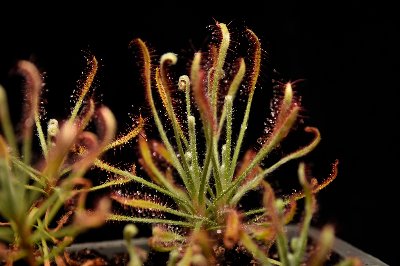
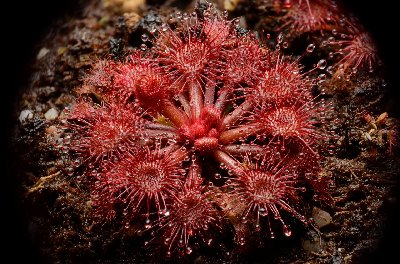
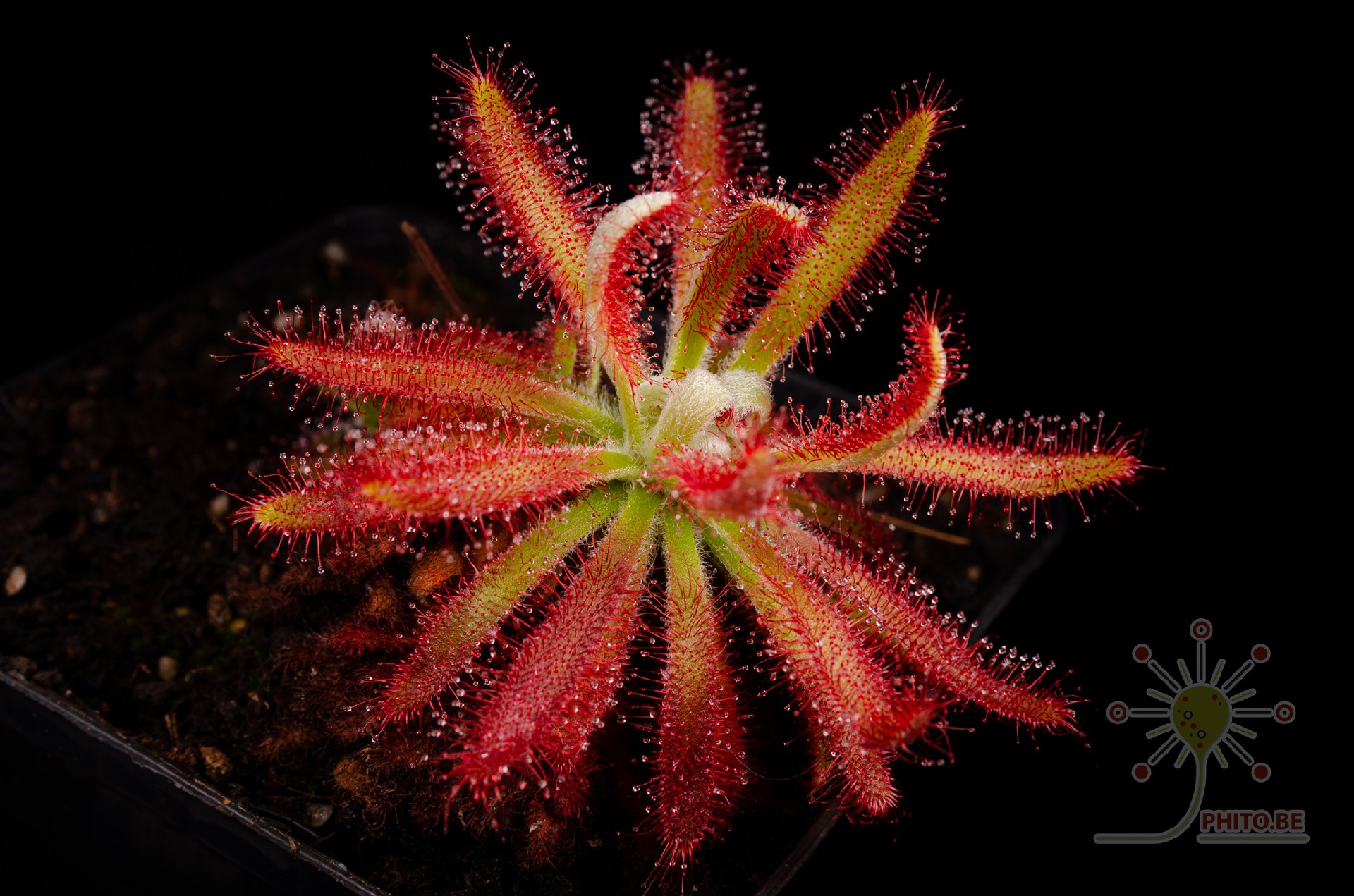
Dense populations of this species form mats of short columns topped with crimson rosettes that, from a distance, look more like cacti than sundews. D. graomogolensis is a stem-forming species: as old leaves die, they persist around the stem, building up pillars that can reach 27 cm in wet or shaded habitats.
Named after the Serra de Grao Mogol where it was first collected, its range extends south through the northern Espinhaco Range in Minas Gerais. It grows in campo rupestre vegetation on sandy soils mixed with coarse quartz gravel and fissured quartzite, at 700-1420 m elevation. At lower, drier sites it hugs the margins of seasonal springs; higher up it moves into wetter, sandier ground.
The rosettes carry semi-erect leaves (up to 45 mm) that turn deep crimson under strong light, with a dense covering of white non-glandular hairs on the underside. Flowers are large for a sundew, pale pink, on tall scapes with up to 30 blooms. Part of the D. villosa complex, it is most closely related to D. ascendens. Both share large flowers, but D. graomogolensis is easily distinguished by its stem-forming habit.
18,00 € 13,50 € -25%(2+ Pflanzen) ?