Drosera villosa
{Serra do Ibitipoca, Minas Gerais}
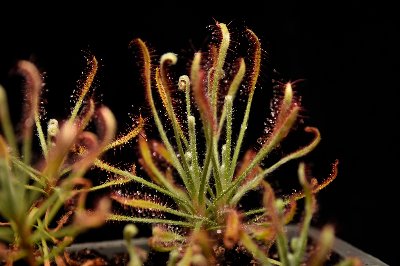
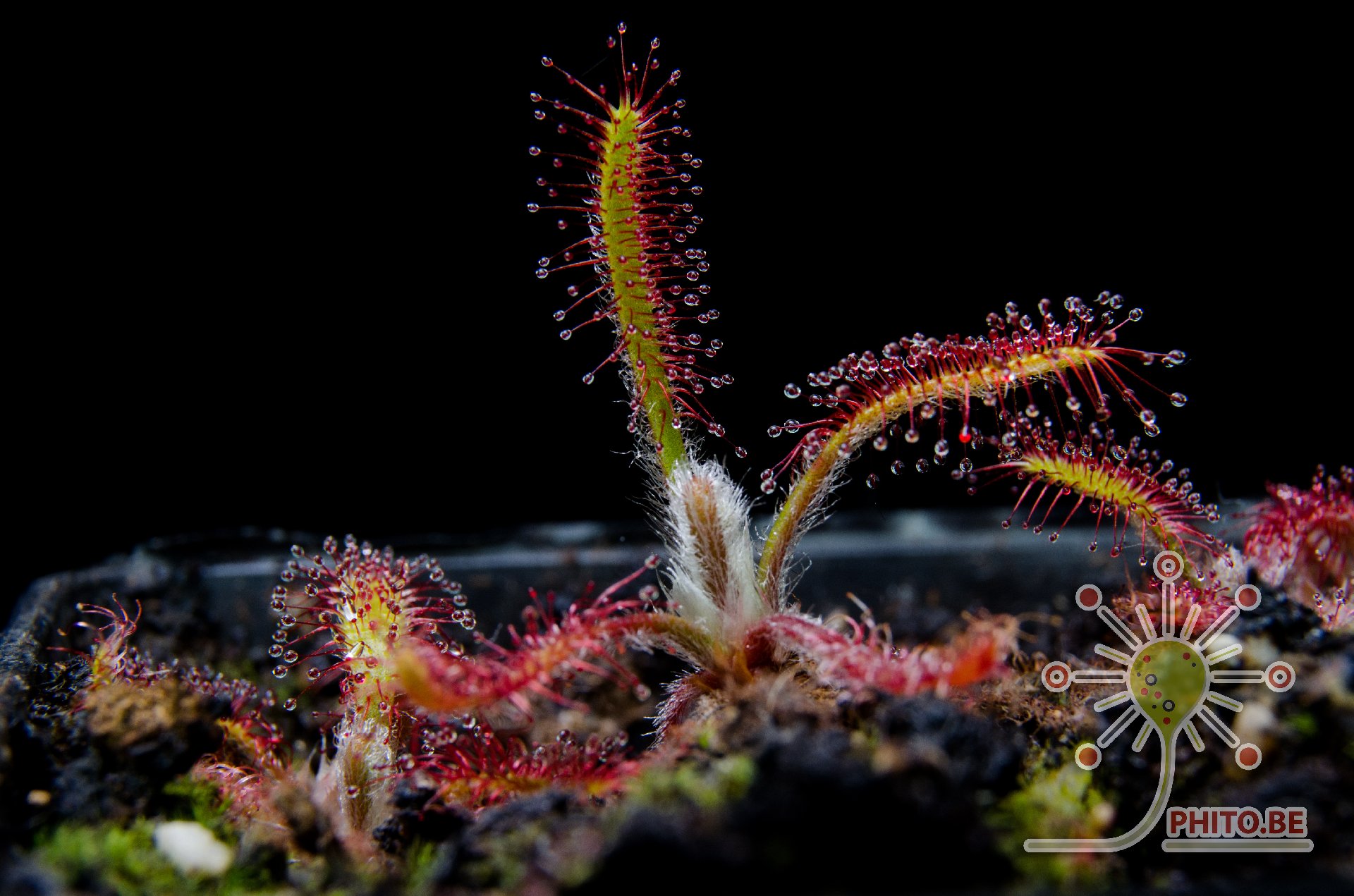
The shaggiest sundew in Brazil. D. villosa is covered head to toe in long white to red hairs, on the petioles, on both leaf surfaces, on the scapes, giving the whole plant a distinctly woolly look that no other member of its complex can match. The name says it all: villosa, from the Latin for "tuft of shaggy hair". It is the type species of the D. villosa complex, which also includes D. ascendens, D. graomogolensis, D. riparia, and others.
This is a narrow endemic, restricted to just two small highland areas about 30 km apart in southern Minas Gerais: the Serra do Ibitipoca and the Serra Negra. It grows at 1200-1750 m along river margins among Sphagnum moss, on quartzite rock, and in wet seepage areas. It even colonises disturbed ground like trail edges.
One of the larger species in its complex, with leaves reaching up to 11.5 cm long. The petioles are elongated, often as long as the narrow leaf blades themselves. Flowers are pale pink to whitish, on scapes up to 35 cm tall carrying up to 30 blooms. Where it meets D. tomentosa var. glabrata at Ibitipoca, the two hybridize naturally.
16.00 € 12.00 € -25%(2+ plants) ?