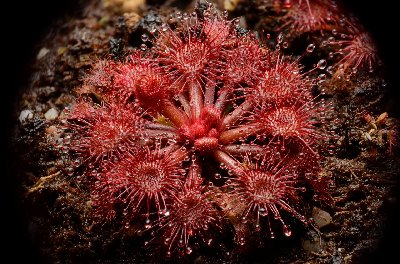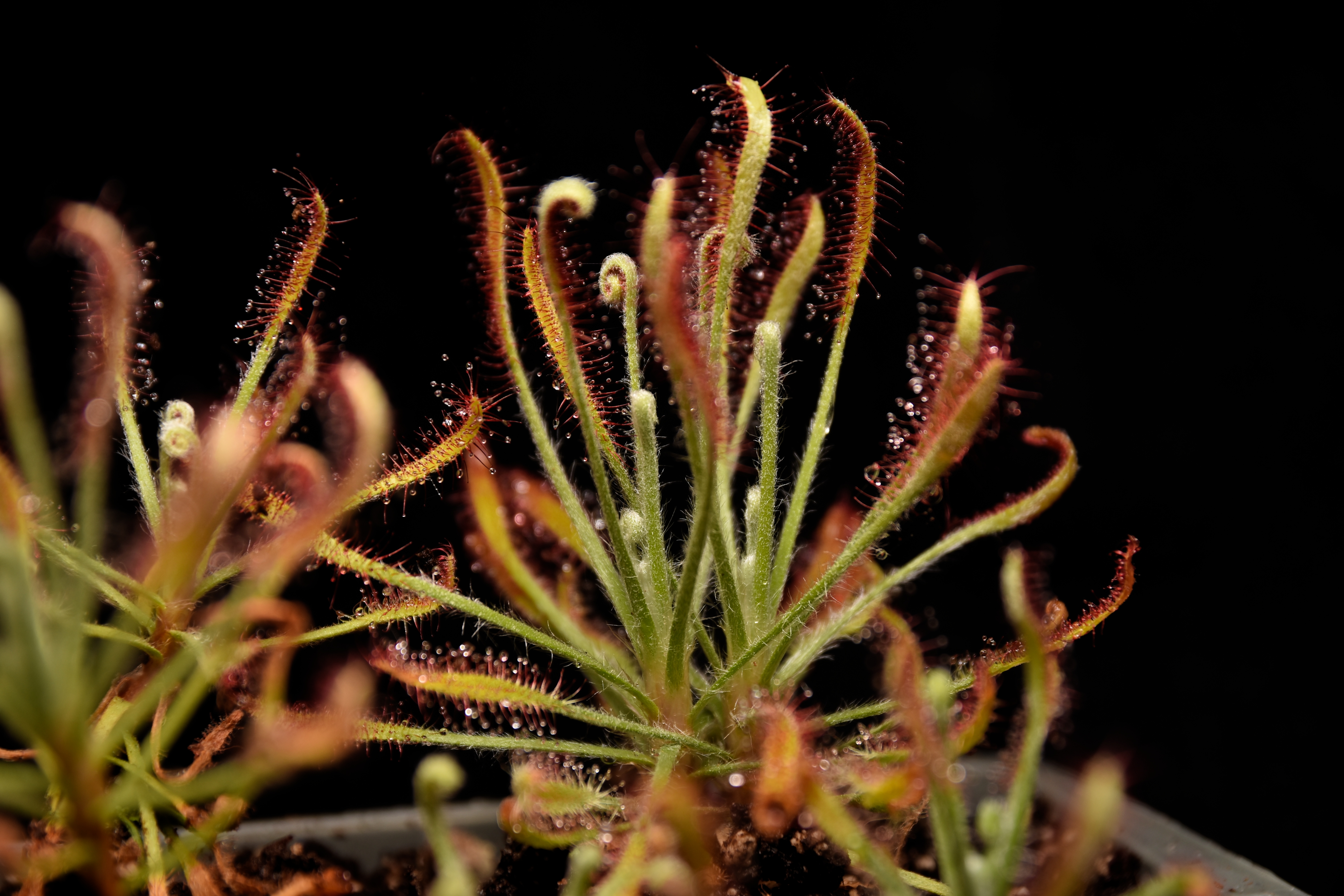
Drosera chrysolepsis
Named for its golden scales: from the Greek khrysos (gold) and lepis (scale), referring to the bronze to golden yellow stipules at the base of each leaf. Those stipules, together with the densely hairy white flower scapes and buds, give the whole plant a distinctive look. D. chrysolepis is a stem-forming sundew found across the eastern highlands of Bahia and Minas Gerais, notably in the Serra do Cipo, at Itacambira, and in the Chapada Diamantina National Park.
It grows in soils that stay humid year round, typically sand mixed with black humus or white quartz, and occasionally on banks of moss. It favours damp but well-drained, slightly elevated spots and frequently occurs amongst grasses in open, scrubby areas.
Plants form erect rosettes of 3-13 elongate leaves on a stem that can reach up to 46 cm tall. The petioles are covered in dense white hairs and the narrow leaf blades bear red insect-catching tentacles. Closely related to D. camporupestris, but more slender, with more leaves and shorter petioles. The two may grow in adjacent habitats at Serra do Cipo, yet never co-occur, and no hybrids are known.
18.00 € 13.50 € -25%(2 plants) ?