Drosera venusta
Named venusta, Latin for "beautiful, elegant", for its large rosettes of semi-erect leaves. Paradoxically, it is one of the most widely grown South African sundews yet remains poorly known in the wild. Its white-flowered form circulated for years under the fabricated name D. coccicaulis alba, a name that was never formally published. The species' own validity has been debated: some botanists have folded it into D. aliciae or D. natalensis, though it is currently accepted as distinct.
Endemic to the south coast of South Africa, from the Oteniqua Mountains near George east towards Port Elizabeth, roughly following the Garden Route. It grows on moist rock faces, mossy embankments, in roadside seepage areas, and in forest gaps and clearings. Evergreen, with no dormant period. Flowers from October to March.
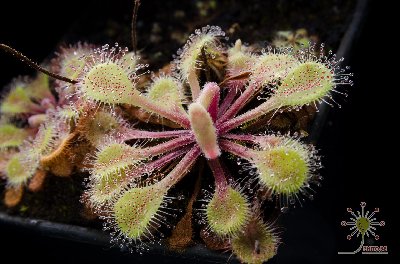
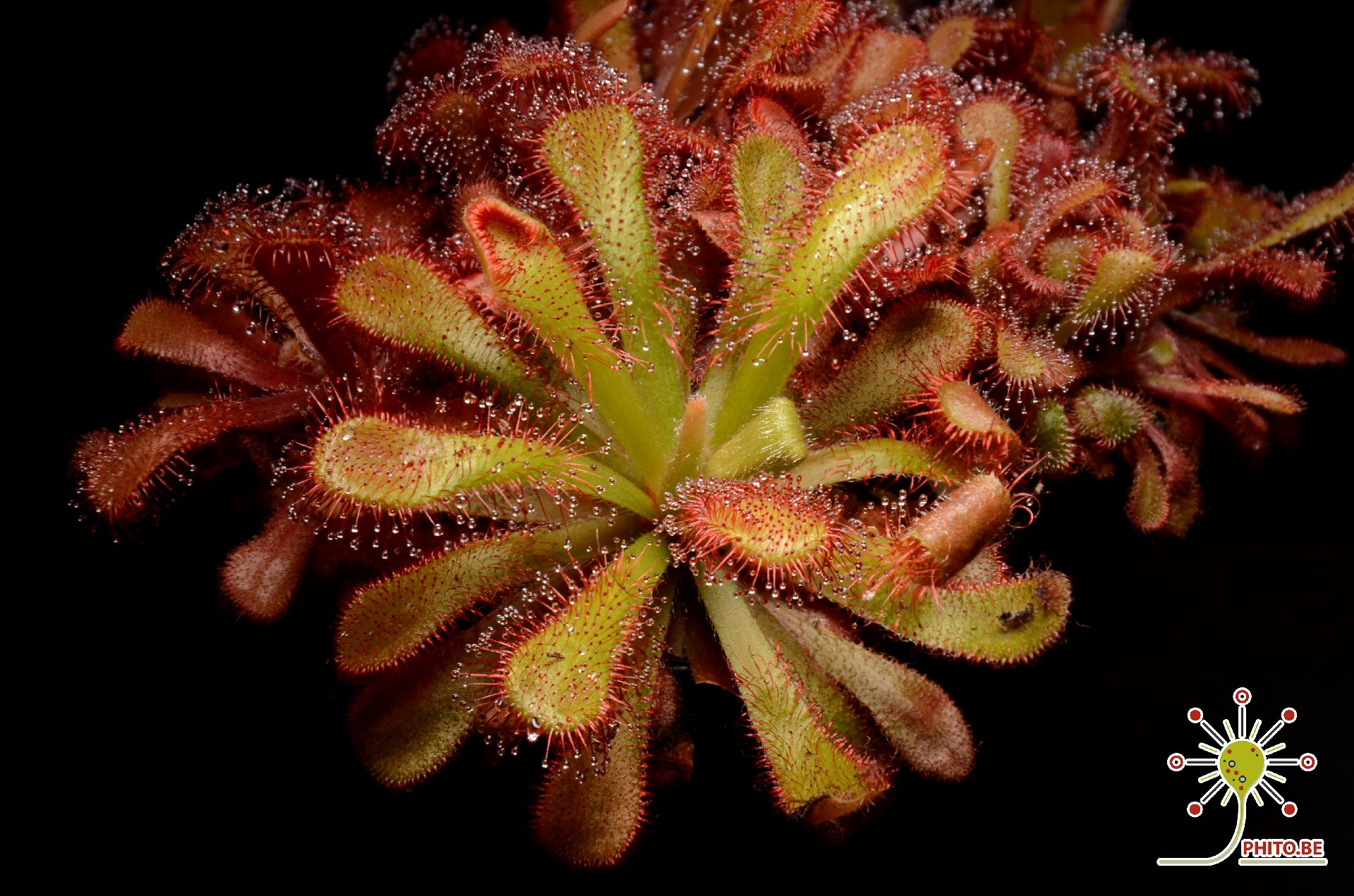
Rosettes are 3-6 cm across, with spoon-shaped leaves held at an angle rather than flat against the ground. That semi-erect habit is the easiest way to tell it from D. aliciae, which forms a flat rosette. Older plants develop a short stem clothed in dead leaf remains. Flowers are purple, on scapes up to 35 cm.
10,00 €(2+ planten) ?