Drosera aliciae
In 1905, Raymond Hamet described this species and dedicated it to Alice Rasse, the person who had encouraged him to take up the study of sundews. He placed it in the wrong section of the genus at the time, and decades later T.M. Salter redescribed the same plant as D. curviscapa without realising it already had a name. The synonym has long since been sorted out, but the name chosen by a teenage botanist endures.
Endemic to the Cape Provinces of South Africa, most common in the Western Cape but extending into the Eastern and Northern Cape. A mid-montane species, typically found between 800 and 1200 m on sandstone escarpments and along gentle watercourses. The plants grow in sandy, peaty soil in wet depressions and seepage sites, sometimes clinging directly to moss or wet rock faces.
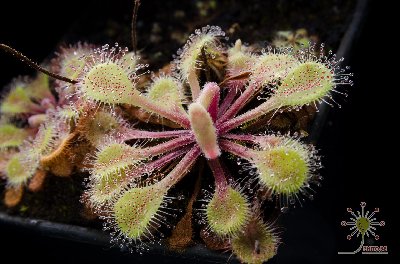
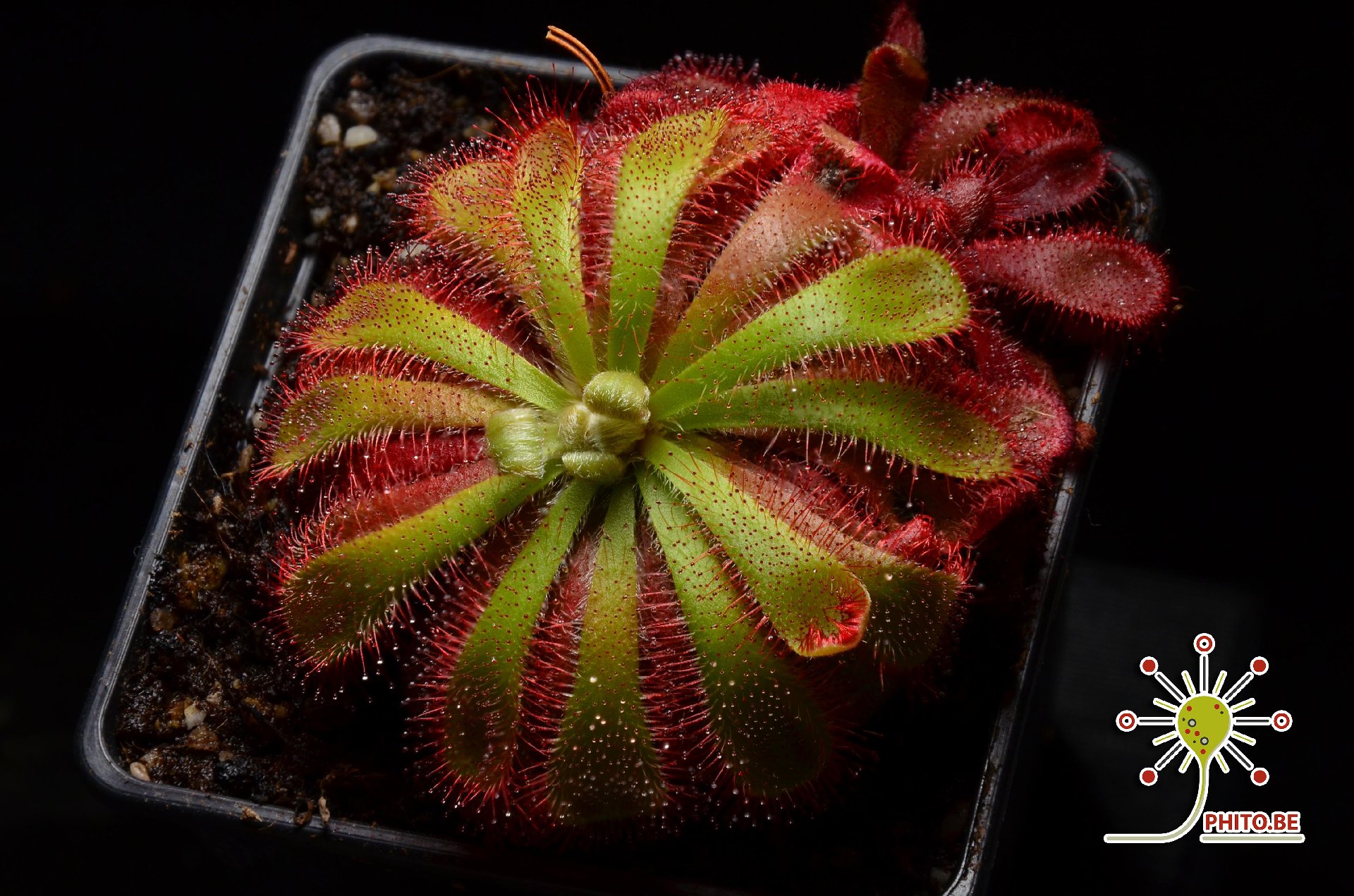
Compact, tufted rosettes of 15 to 30 spoon-shaped leaves that form a neat, layered circle. Dead leaves persist as a mat underneath. Inflorescences emerge on long, curving scapes and carry 4 to 12 pink flowers. Closely related to D. slackii, which has broader, fiddle-shaped leaves and red stipules where D. aliciae has white papery ones. One of the easiest sundews to grow.
8.00 €(2+ plants) ?