Drosera meristocaulis
{Cerro de la Neblina, Venezuela}
The only close relative of the Australian pygmy sundews found anywhere outside Australia. Molecular work confirmed that D. meristocaulis arrived in South America via long-distance dispersal, not through the ancient breakup of Gondwana. Unlike its Australian cousins, it does not produce gemmae. It has been knowingly observed in the wild only a handful of times: when discovered in 1954, when collected in 1985, and when visited in 2004 by an expedition that required chartering two helicopters and Cessnas for fuel drops at Yanomami villages along the route.
Known only from the summit plateau of Cerro de la Neblina on the Venezuela-Brazil border, at 1900-2200 m elevation. It grows in open areas along small rocky watercourses and sandstone outcrops, in a landscape of knee-high heath savannah alongside Heliamphora pitcher plants and the iridescent-leaved Stegolepis hitchcockii. Travel there remains extremely difficult for both political and financial reasons.
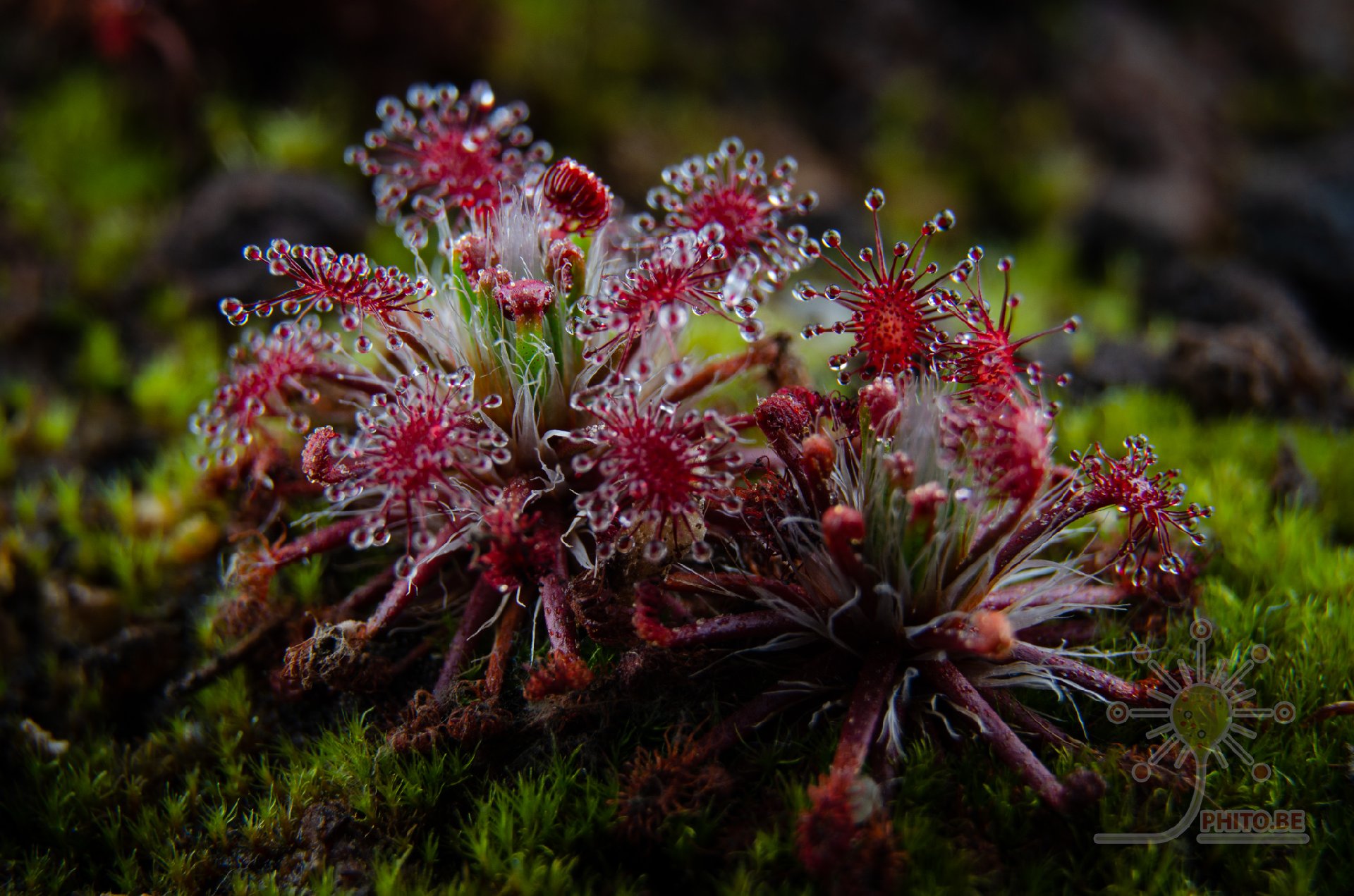
D. meristocaulis forms branching, column-like stems 5-15 cm tall, densely clothed in persistent dead leaves and prominent silvery-white stipules. The living rosettes sit at the tips, with small leaf blades (4-5 mm) and relatively large pink flowers. It does not self-pollinate, does not produce gemmae.