Drosera cistiflora
white flower
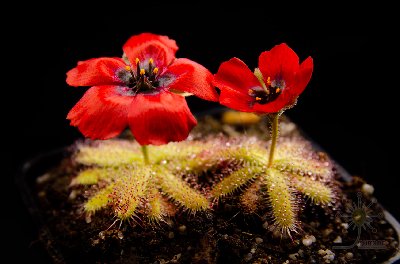
Named cistiflora, the rock-rose flower: Linnaeus thought its blooms resembled those of Cistus, and they are among the largest in the genus, up to 5 cm across. No other Drosera matches its range of flower colours. Over a dozen forms have been recorded, from white to pale pink, purple, dark lilac and scarlet, many with a dark centre. Ours is the white form with a dark eye. The variation may be driven by competition for monkey beetles, the main pollinators in the Cape fynbos.
Common across the Western Cape, from the hinterlands of Cape Town to Port Elizabeth, in seasonally moist sandy loam on Table Mountain Sandstone and clay loam along the south coast. Several localised colour forms are threatened by habitat loss.
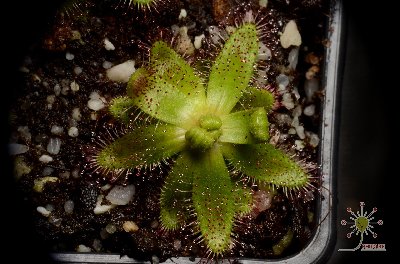
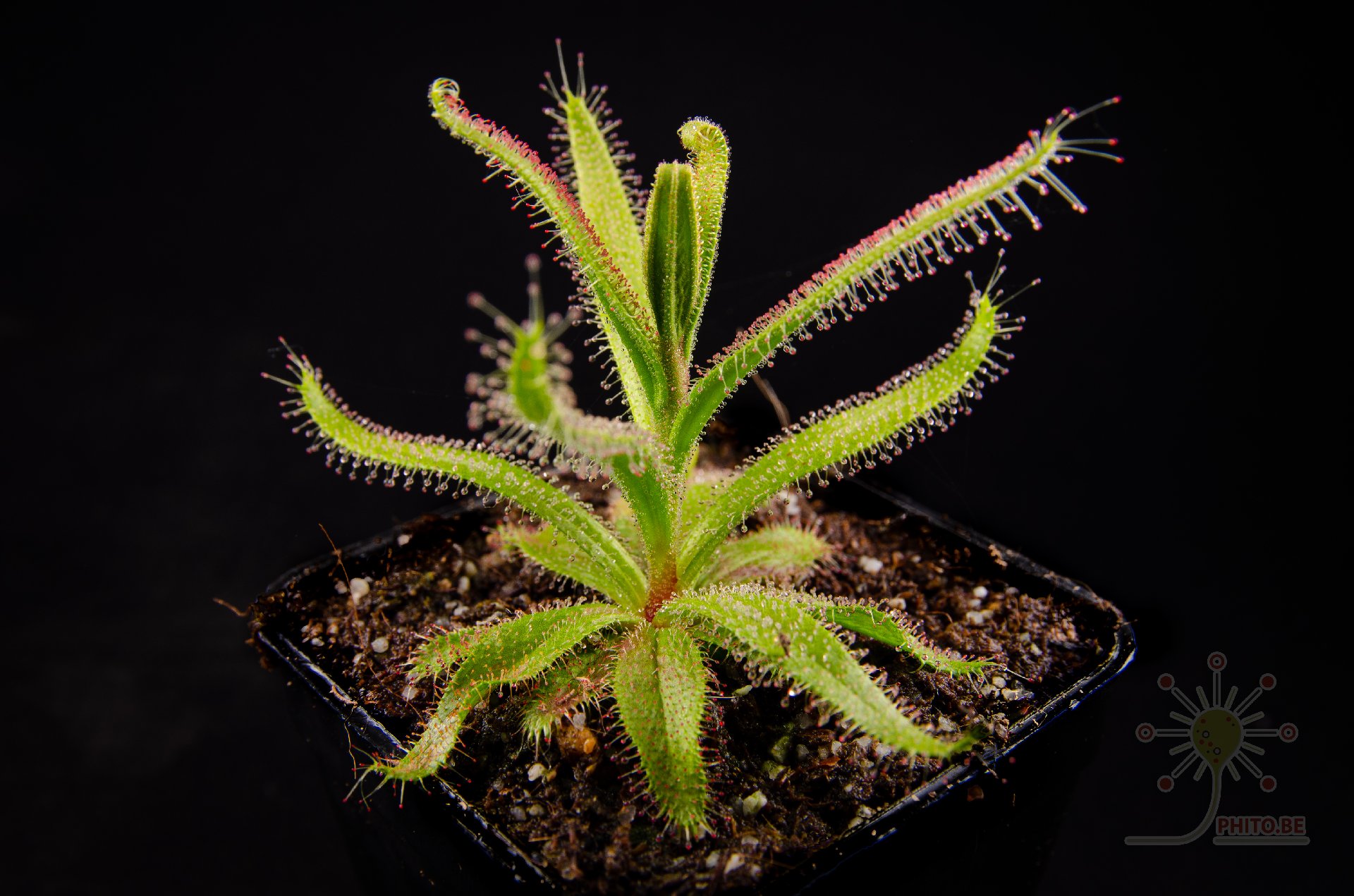
A winter grower. It appears with the Cape rains, producing a flat rosette of narrow leaves, then sends up a leafy stem 10 to 40 cm tall topped with flowers from July to November. When summer turns hot and dry, it dies back entirely to its roots until the next winter.