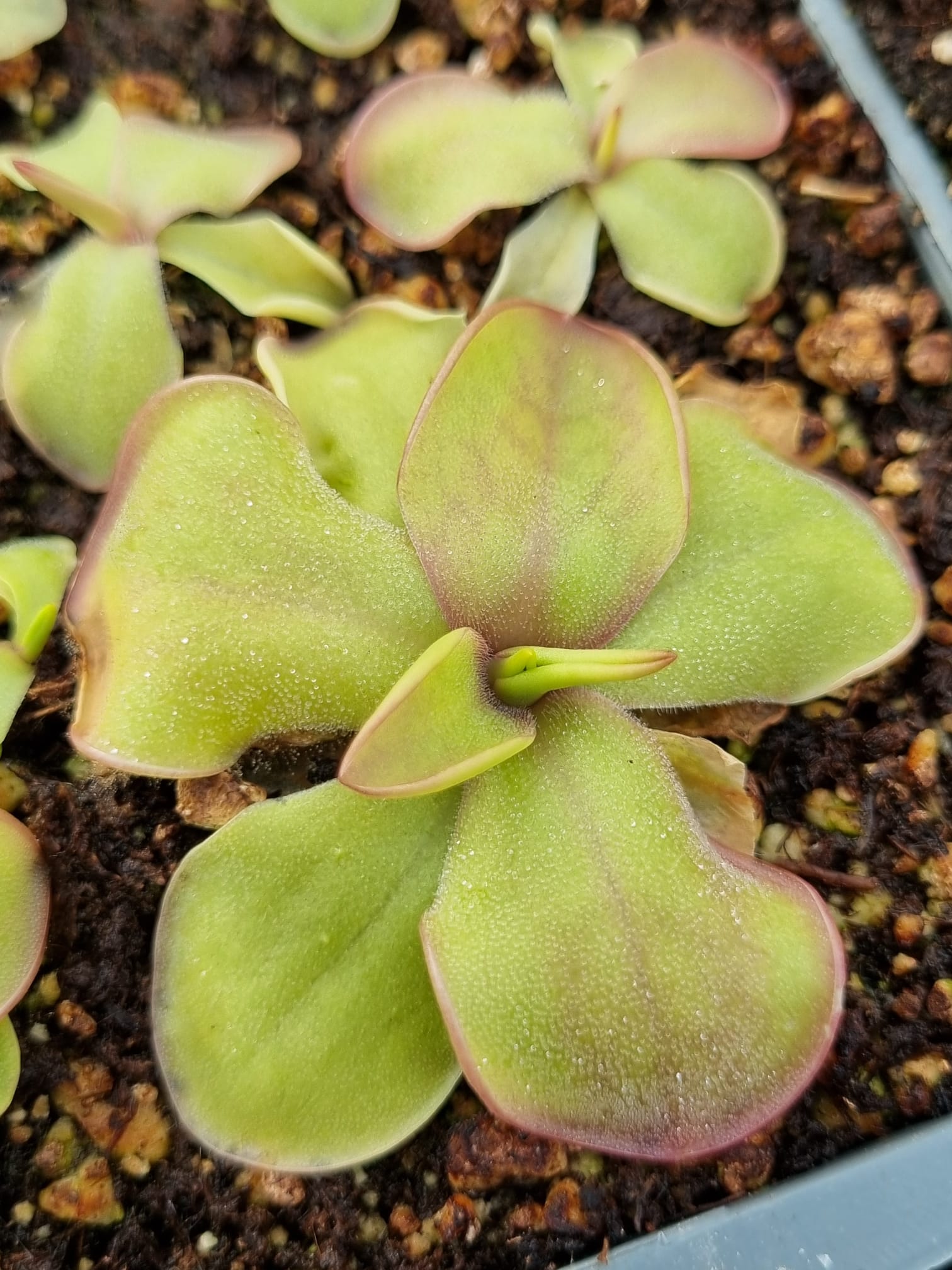
Pinguicula hemiepiphytica
{Sierra de Juarez, Oaxaca, Mexico}
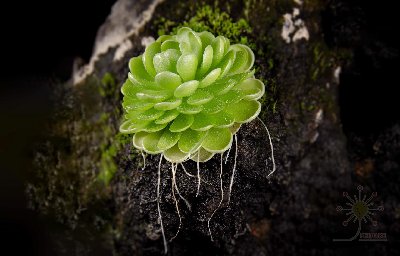
Hemiepiphytica means "half-epiphyte", and that is exactly what this species does: it grows on moss-covered tree trunks in Mexican cloud forest rather than rooted in the ground. For decades it was filed away as P. moranensis in herbarium cabinets, until Zamudio and Rzedowski looked at live material from the Sierra de Juárez in 1991 and recognised a new species, with a longer, funnel-shaped corolla tube and this unusual growth habit. Hummingbirds have been observed visiting its flowers in the wild.
It is known only from the northern slopes of the Sierra de Juárez in Oaxaca, at 1900 to 2300 m in the bosque mesófilo de montaña, cool, constantly wet cloud forest of Engelhardtia mexicana and oaks, where the annual rainfall often exceeds 2000 mm, drifting in as trade-wind mist off the Caribbean. Plants cling to the moss on tree trunks, or root into cushions of moss and liverwort on boulders and rock outcrops wherever the air stays saturated enough.
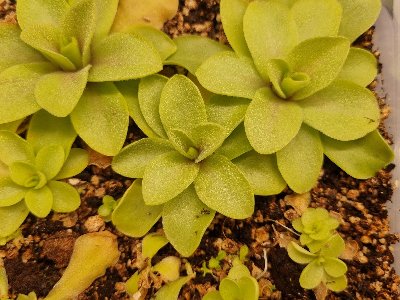
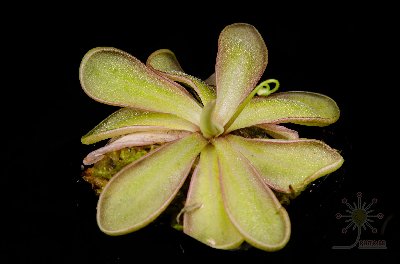
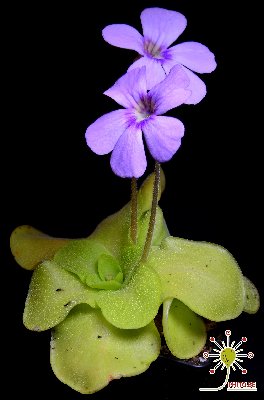
Summer rosettes carry 4 to 12 elliptical leaves, 3 to 7 cm across, with slightly inrolled margins. In winter the plant contracts into a tight succulent bud. Flowers are large, up to 8 cm long including the spur, violet-purple with a creamy throat edged in darker red. The corolla tube is wide and funnel-shaped, then tapers suddenly into a narrow spur: a landing pad for a hummingbird's beak, a nectar channel just wide enough for its tongue. Closely related to the red-flowered P. laueana.