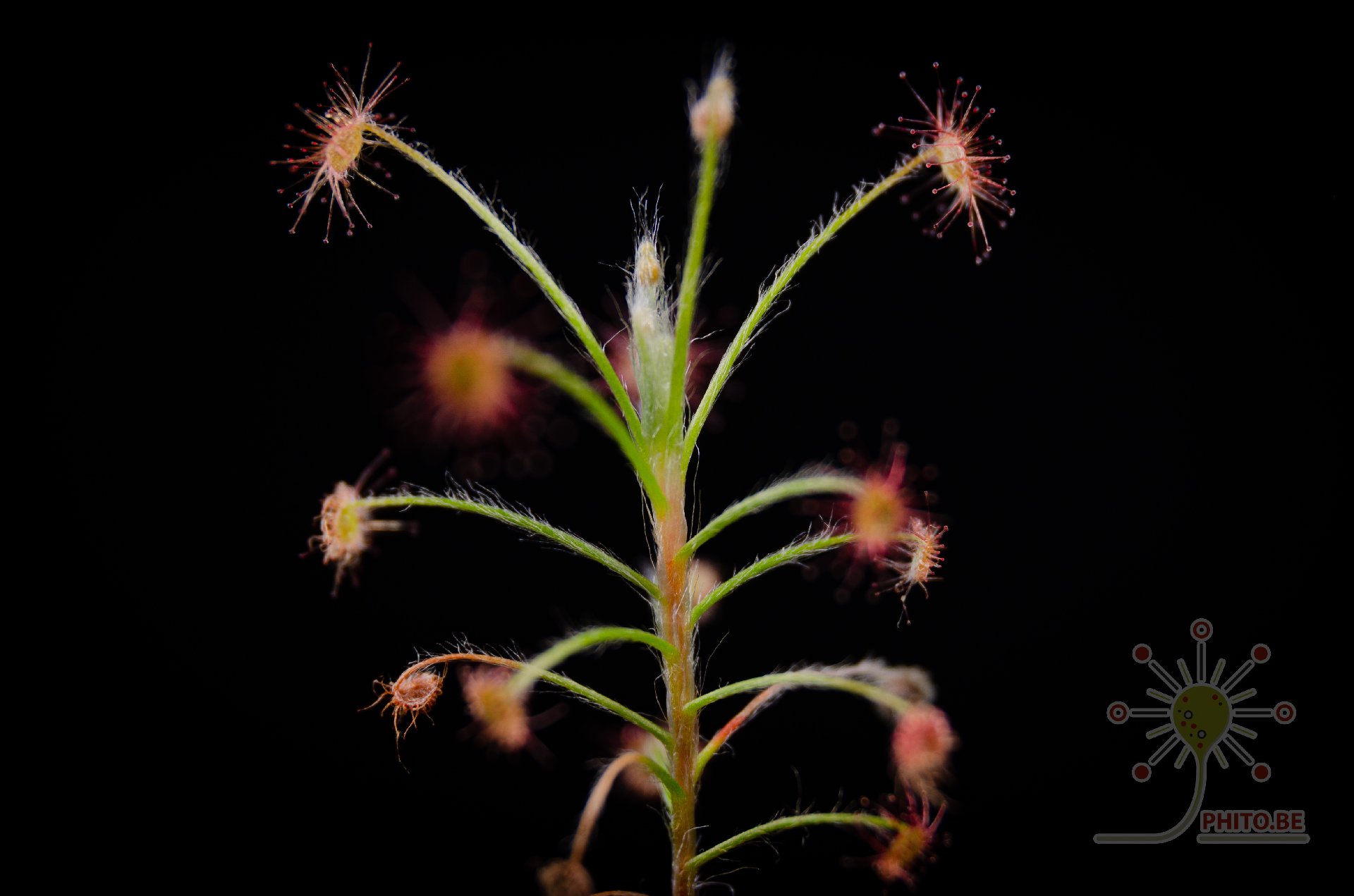
Drosera paradoxa
N.T. form
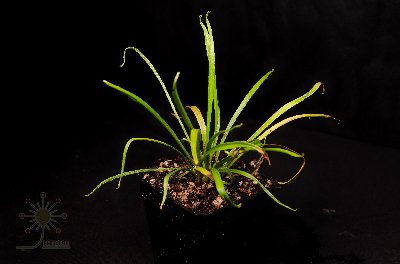
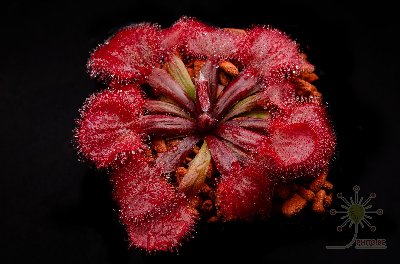
Named for the confusion it caused. Allen Lowrie spent four years visiting populations across northern Australia, convinced he was looking at several different species: tiny seedlings, flat stemless rosettes, and tall woody-stemmed specimens with pincushion heads. They turned out to be the same plant at different life stages. The growth cycle was so hard to unravel that Lowrie named it paradoxa, from the Greek for "contrary to expectation." It is the only species in the petiolaris complex that develops an erect, woody stem.
Found across tropical northern Australia, from the Kimberley in Western Australia eastwards through Arnhem Land to Kakadu National Park in the Northern Territory. It grows on skeletal sandy soils over sandstone pavements, in cracks of bare rock, on moss pads, and along the banks of seasonally dry creeks. In Kakadu, monsoonal floods knock plants flat each wet season, but the prostrate stems re-root and keep growing perpendicular to the old growth. Stems there can reach almost a metre.
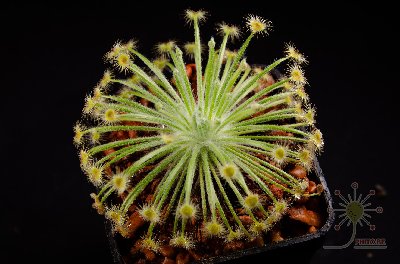
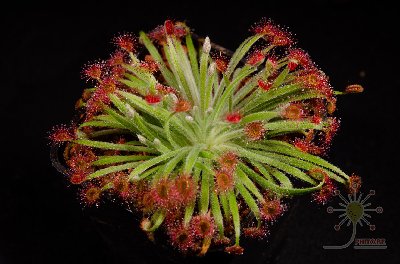
Plants form a loose rosette of leaves on long, narrow, hairy petioles topped with small round trapping blades, sitting atop a woody stem that typically reaches 30 cm. Flowers are pink, purple or white, with 50 to 70 or more per stalk during the dry season. This is the NT form, which is self-fertile, an unusual trait since most petiolaris complex species require cross-pollination.
16.00 € 12.00 € -25%(1+ plants) ?