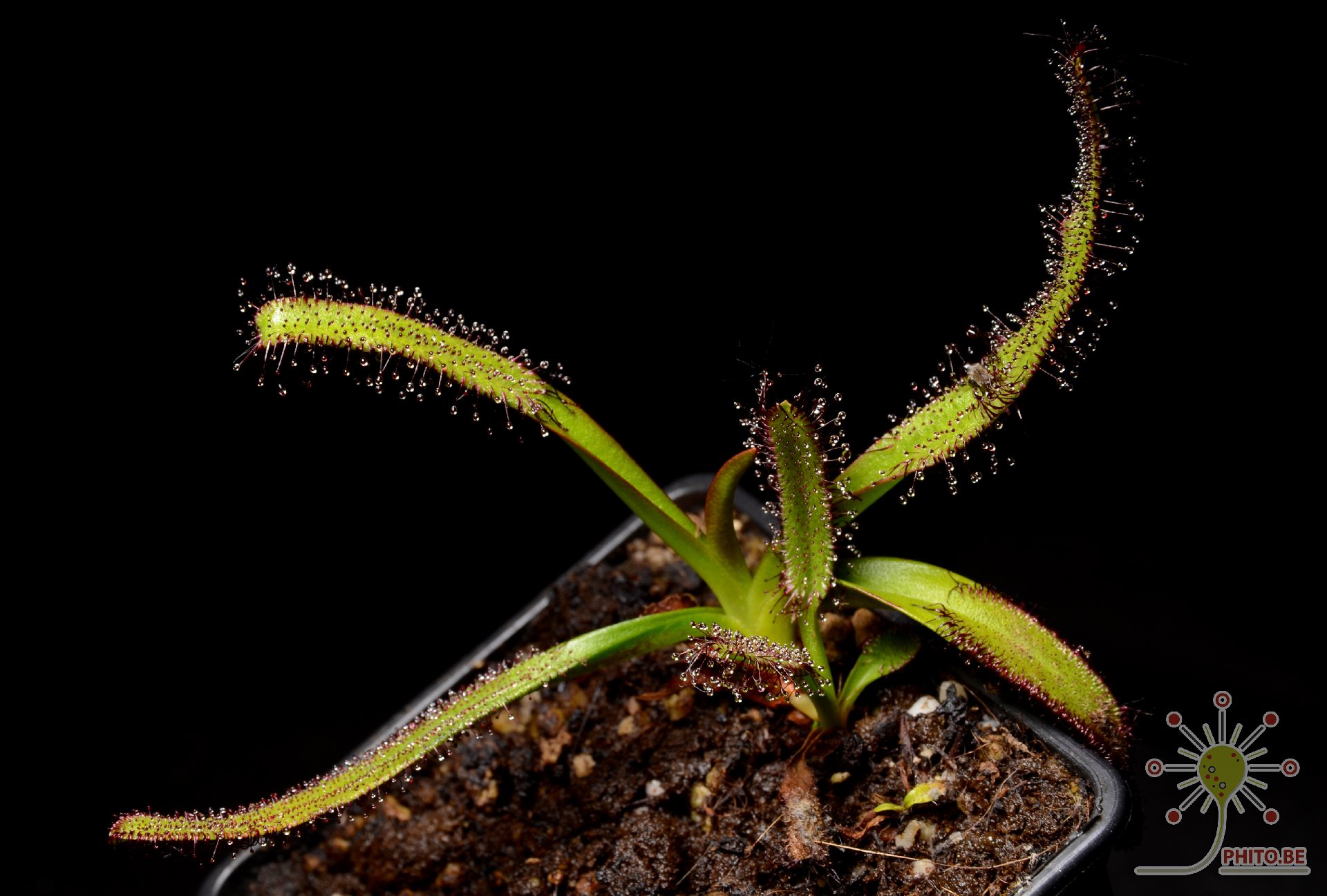
Drosera murfetii
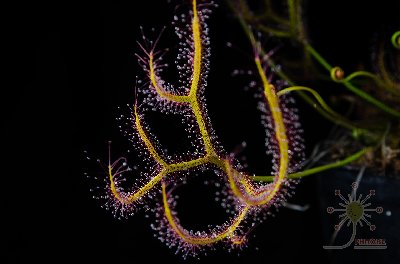
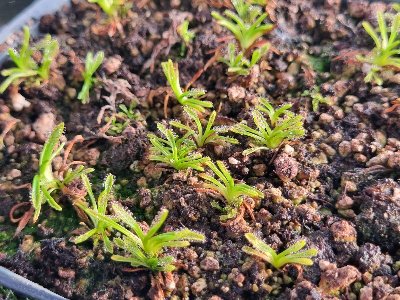
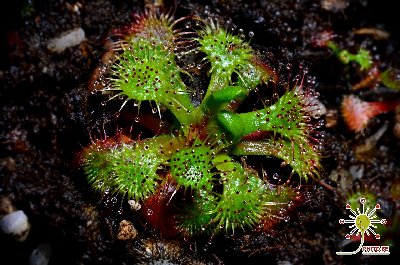
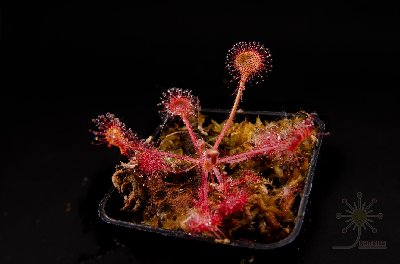
A sundew that is mostly not carnivorous. D. murfetii typically produces only one or two glandular, insect-catching leaves at a time. The rest of its foliage, two to five broad, smooth leaves that emerge first in a fan-like arrangement, carries no tentacles at all. Sometimes the plant has no carnivorous leaves whatsoever. It was described in 2014 after decades of being lumped with D. arcturi as a "giant form." Not everyone accepts the split, but Kew, the Tasmanian Herbarium and IUCN all treat it as a distinct species.
Endemic to the sub-alpine and alpine regions of Tasmania, where it grows on wet heathlands, along the shores of glacial tarns and among cushion plants like Donatia and Dracophyllum. Snow buries these habitats for months each winter. The type locality is Lake Esperance in the Hartz Mountains National Park, part of the Tasmanian Wilderness World Heritage Area. It also occurs at lower elevations in southwestern Tasmania, down to near sea level in the Davey River catchment.
Larger than D. arcturi in all respects: bigger leaves (glandular leaves up to 20 cm), bigger white flowers, and more flowers per stalk. The most reliable way to tell them apart is the stigma colour: reddish-pink in D. murfetii, white in D. arcturi. Named after Denzel Murfet, a South Australian communications technician, orchid and carnivorous plant enthusiast who discovered the species while collecting with Allen Lowrie.
18.00 €(2+ plants) ?