Drosera hamiltonii
The only sundew with fused styles. D. hamiltonii sits alone in its own subgenus, Stelogyne, a placement reflecting just how unusual its flowers are: the styles are joined into a single tube, a structure found nowhere else in the genus. It shares its swampy habitat with Cephalotus follicularis, the Albany Pitcher Plant, and the two species mirror each other in ecology, both depending on periodic bushfires to clear the dense shrub that otherwise shades them out.
The species grows along the southern coast of Western Australia between Augusta and Albany, in wet peaty soils on the sloped edges of swamps where water seeps from the ground. Between fires, plants persist but stay small under encroaching vegetation. After a burn, both D. hamiltonii and Cephalotus recover rapidly from their rootstocks and flower profusely in the newly opened ground.
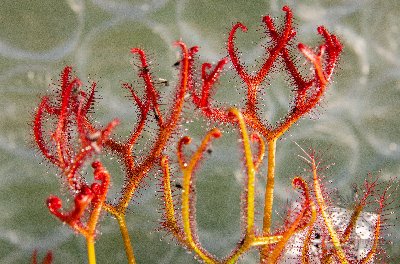
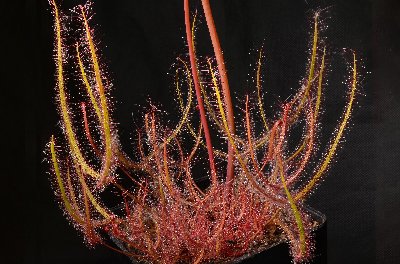
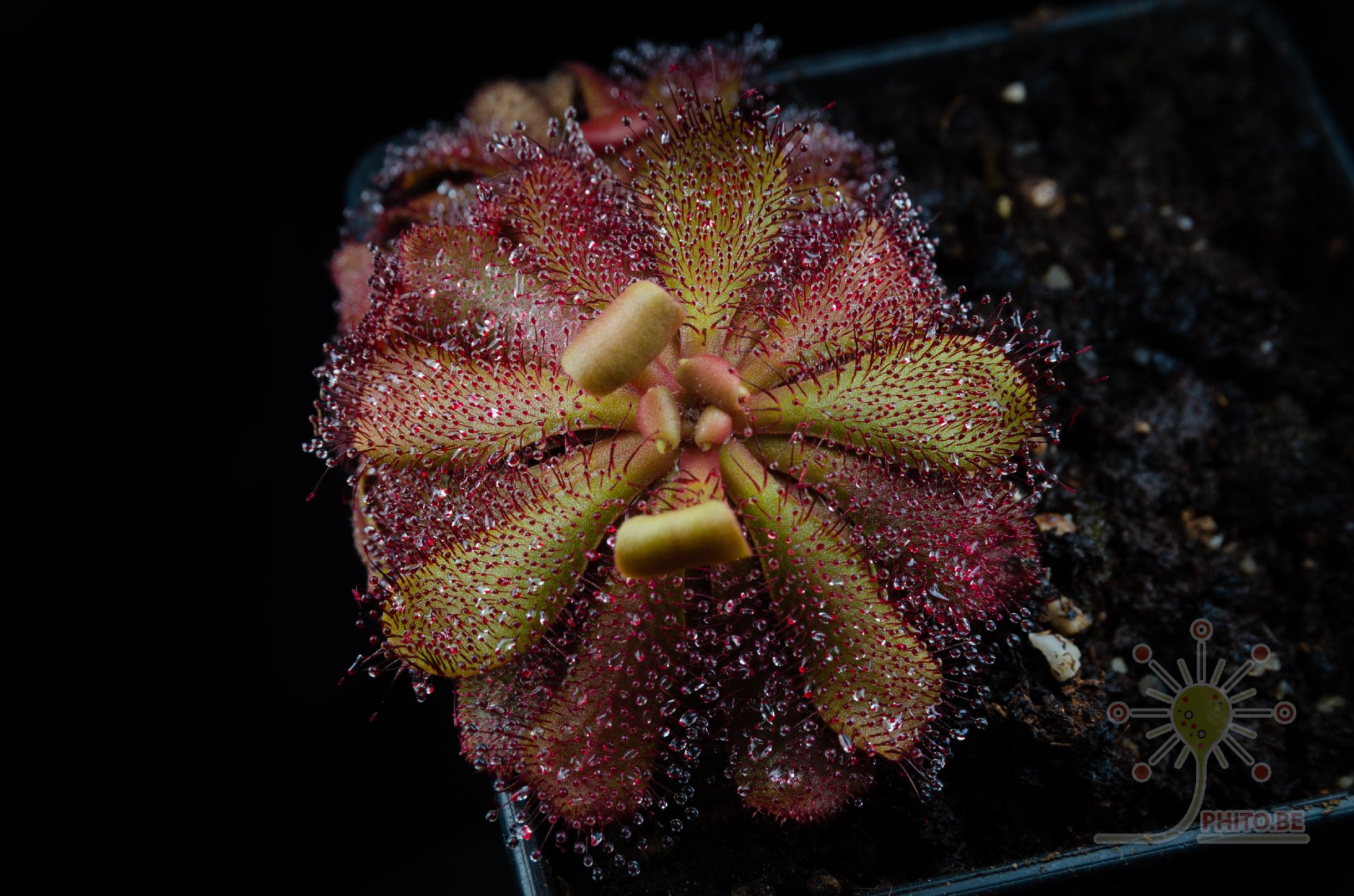
Flat rosettes of 4-6 cm, green in shade, turning maroon in full sun, with 10-20 paddle-shaped leaves. New leaves unroll from the centre of the rosette, unlike any other sundew in the region. Underground, thick black fleshy roots branch and produce plantlets, slowly building clonal colonies. Pink flowers appear in November-December on 30-40 cm scapes that coil at the tip when young, protecting the buds as they push up through surrounding vegetation.