Drosera chimaera
Named after the Chimaera of Greek mythology, a creature pieced together from different animals. The name fits: the rosettes look like D. latifolia, while the flower stalks and seeds resemble D. tomentosa. The describing authors suspect a distant hybrid origin between two separate species complexes, though no other sundews currently grow nearby to confirm this.
A narrow endemic known from just three populations in the Serra de Grao Mogol, northern Minas Gerais, Brazil. It grows around 700 m elevation in relatively dry areas alongside watercourses and on small vegetated islands in tributaries, in rocky to sandy soils over sandstone.
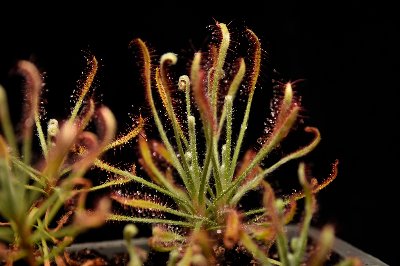
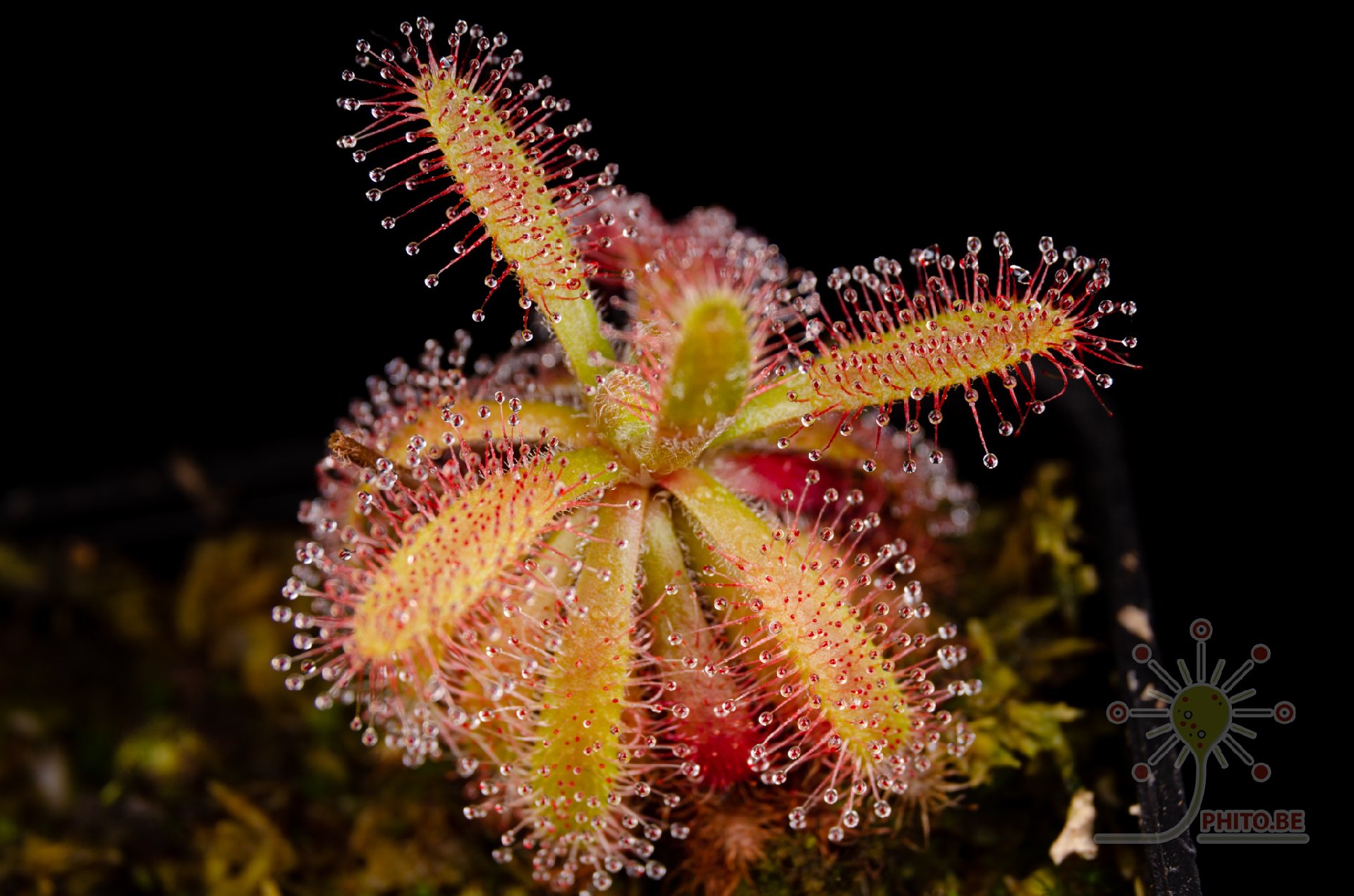
A compact rosette sundew with 10-16 semi-erect leaves, each 1-3 cm long. The most distinctive feature is the flower stalks (up to 27 cm tall), which are densely covered in non-glandular hairs in the lower half that thin out toward the top. Flowers are pale pink. Both leaf surfaces carry tiny red glands, an unusual trait shared with the stems and sepals.